by Pam Pacelli Cooper, Verissima Productions Memories of July 4th, 2020: Masked and cautious, we went to our local supermarket to buy corn for two, a small package of hamburger, and pre-sliced watermelon. In three different houses across town, the friends we had joined for years in a celebration of the “glorious Fourth “did much[Read More]
Life Preservers Blog

Memory and Place: Your Childhood Geography Map
How often do we think about where we grew up and the geography of our neighborhoods? Do we consider how much geography shaped our family history narrative? Recently, I took some time to think about those questions and to reflect upon my childhood geography map. My Childhood Geography I was looking at a picture of[Read More]
Ancestoring™:* Becoming Good at It
A woman records nine hours of her oral history. Born in the late 1930’s, she wants her 10 year old granddaughter to know what life was like in a world without cellphones and the internet, a world where girls couldn’t wear pants to school, and where school segregation was an accepted fact. What she has[Read More]
Creating an Archive of Your Family’s Voting History
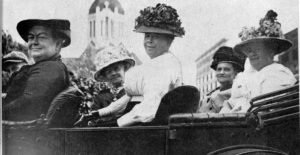
by Pam Pacelli Cooper October is American Archives Month. As the leaves fall and we turn our energies indoors, we can begin to think about the archives in our own homes: troves of letters never read or catalogued; memories not yet recorded; years of photos cached in disorganized files on multiple computers, thrown into shoeboxes,[Read More]
As I Write This Letter*: An Homage to National Letter Writing Week
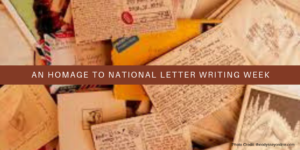
I received a number of annual letters from friends this year. This is not a type of letter I am good at writing, but I treasure it when other people can summarize their lives in one page, and I save their letters year to year. One friend has been sending her life summaries for 30[Read More]
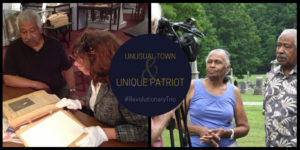
An Unusual Town and a Unique Patriot: “A Revolutionary Trio” (Part Two)
Stockbridge, Massachusetts is known today as an elegant town, the home of the Norman Rockwell Museum, the Red Lion Inn, and the estates of author Edith Wharton and sculptor Danie Chester French. During the time of the American Revolution, it was an entirely different place, unique in its cultural and political diversity, and home to[Read More]
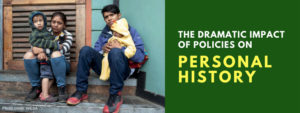
Bearing Witness by Preserving Stories
The past week has brought a constant stream of stories of people whose lives will have been forever changed by a policy that is ripping apart the families and children of asylum seekers…but this is not the first time actions taken by a government have had a dramatic impact on the personal histories of an[Read More]
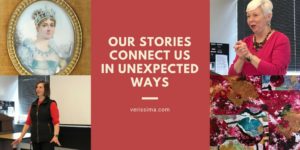
The Power of Objects: Creating Connection Through Grown Up Show and Tell
By Pam Pacelli Cooper President, Verissima Productions On March 5, an intergenerational group of 25 people ranging in age from mid-20’s to eighty gathered in a classroom at the University of Massachusetts, Boston. The simple premise: for the event: bring an object that has meaning and tell its story. Sponsored by the curriculum committee of[Read More]
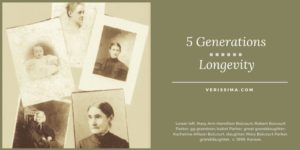
Carrying Two Hundred Years of Memories: The Blessings of Longevity
by Pam Pacelli Cooper President, Verissima Productions I was born less than 70 years ago. What if I were to tell you that I carry with me memories that are 200 years old? Read on to find out how that became possible. Two weeks ago, I responded to Amy Johnson Crow’s challenge to write about[Read More]
A Challenge for the New Year: 52 Weeks, 52 Ancestors
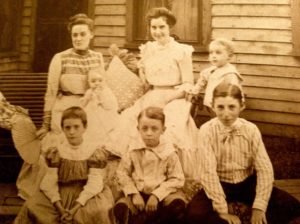
by Pam Pacelli Cooper President, Verissima Productions Happy New Year All! May 2018 be the year you “Save Lives”. As a personal historian, I’ve been encouraging people to save their stories for over 20 years, but I recently realized I haven’t been so good at saving my own. This year, I decided to take genealogist[Read More]